Pages

Thursday, August 8, 2019

Ko Au/Ta Moko

This week in Maori we started to learn about Ko Au/Ta Moko, as well as Mataoro and Niwareka. We watched the story of Mataoro and Niwareka; after watching the video we then looked at how the story can be summarized. And so we started to summarize and take the main parts of the story together which is basically summarizing. The summary wasn't very long, only about a paragraph long; after the summary, we then, looked at the different designs of the Ta Moko and in a template, we got to make our designs. I looked at some designs on the internet and incorporated it into my own.

Summary:
Link

Renewable Energy

RENEWABLE ENERGY

Aim: To compare the amount of gas that is produced from different types of biomass.

Material:
  1.  (3) Bottles
  2.  Permanent marker
  3.  Disposable gloves
  4.  Cup  
  5.  Fresh manure  
  6. Mashed banana
  7.  Funnel
  8.  Water
  9.  (3) Balloons
  10. Vegetable peelings
Steps:


  1.   Label all 3 bottles: 1 Manure; 2 Manure and vegetable peelings; 3 Manure and mashed banana 
  2.   Place 1 cup of manure; 1 cup manure and 1 cup of vegetable peels; 1 cup manure and 1 mashed banana.
  3.  Fill the bottle with water but leave a space between the water and the top.
  4.  Place a balloon on top, secure it with tape.


A picture of three bottles with balloons on top, containing cow manure with vegetable peelings or mashed banana.
Energy science project


Investigation.


Research the following Biomass fuels. You will need to:

Write a definition of the fuel.
Write 8 sentences about the fuel. 
  • How is it made? Plants and trees absorb sunlight and contain it in the form of energy and can be released by burning. It's not only plants and trees but animals and humans as well, animal manure (faeces) can be transformed into biogas, they could be burned.
  • Where is it made? Biomass fuel can be made and used in ReEnergy's power generation facilities, which are equipped with the right and proper equipment for burning these fuels.
  • What is it made with?  It is made with animal, human waste; plants and trees.
  • What countries use it? Ireland, USA and Sweden.
  • What uses will it have in the future?  Hopefully, it could possibly be one of the primary contributors to the world's energy and could reduce our usage of fossil fuels.
Place 1 image of the fuel.
Image result for biomass fuels

Biomass Fuel types.

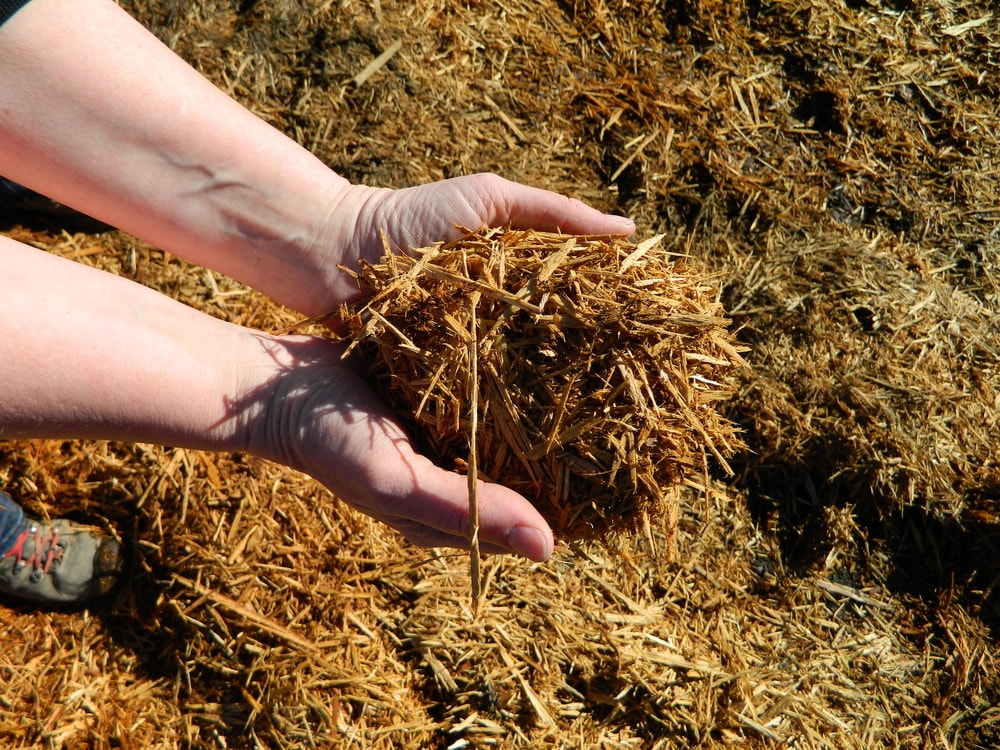
Name: Agricultural crops and wood fuels.
Definition: The use of Wood fuels to produce either electricity as well as heat. That defines the crops as well as they can be used to produce the same energy, (thermal and or electrical.)

Research:
Agricultural crops and woods fuels are a part of the sustainable energy that we might soon be using more frequently. Crops such as miscanthus have a different structure and or composition to wood and its combustion differs by how it's handled. Wood fuels, such uses are as follows: firewoods, charcoal, sawdust and many more.

Uses: It can be used as thermal energy as well as electrical in some ways.
Image:
Image result for agricultural crops and wood fuels

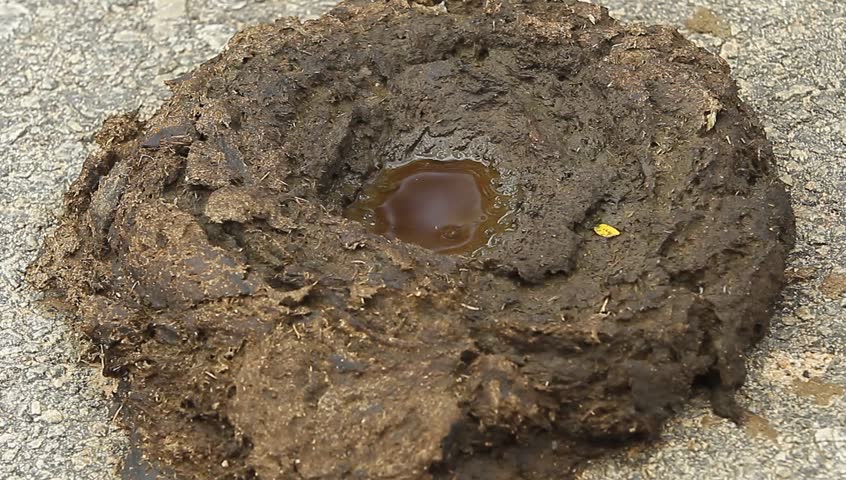
Name: Animal waste.
Definition: Animals waste can be converted into biofuel by means of drying and burned.

Research:
The common method of turning animal waste into fuels is by drying the manure and then by burning the manure. It could also be turned into biodiesel, as well as gas.

Uses: Animals waste can be turned into bio-energy and fertilizer.
Image:
Image result for animal waste
Name: Biogas
Definition: Biogas is the many organic gases that is or can be produced from the organic materials breaking down; it could be manure, plant material, sewage, etc.

Research:
When organic matters breakdown, gases form, most of the gases that is obtained is methane and carbon dioxide; which could also have traces of hydrogen sulfide.

Uses: Cooking or any other type of heating purposes.
Image:
Image result for biogas

Name: Biofuels
Definition: Biofuels is simply fuels that one can deprive from living thing such as animals, plants, trees, etc.

Research: Biofuels can possibly be produced from crops, the process of producing biofuels are fermentation and or chemical reactions. The matter is then refined so that it may fuel cars or any other vehicles.


Uses: work fuel, fuel for vehicles, automobiles, truck and possibly aircraft.
Image:
Image result for biofuels

Tuesday, August 6, 2019

Books Alive Workshop

Last week, on Friday 2nd of August some year 8's,9's and 10's had the privledge of meeting/going to workshops of two fantastic authors (Eileen Merriman and Mandy Hager). The workshops were set at the Turanga Libary, it included several schools different which went to the workshops as well.  I enjoyed the visit very much, I love to read that is why visiting this library [which I've never been to before] with an astoning amount of books was very thriling and exciting to me. (They had mangas too....I mean come on...and chess...) On top of that we get to meet authors, which they then share their expirience which contributes to my knowledge about writing as I love to write. The first author was Eileen Merriman who wrote Invisibly Breathing "A moving story about unconventional love, bullying and being true to yourself." as quoted. Her book focused on bullying how the characters faced their challenging lives; also focusing on gay fiction genre, how they are treated int the world.  She talked about her experiences, her life and how she got to be an author.
It was an interesting story, we took notes while she spoke, there were a couple of sentences that I have writen but most have been kept in mind. However, Mrs.Handley [the teahcer supervising us] took notes on most if not all of what Eileen Merriman had talked to us about.


After the first workshop there was a break where we were allowed to wander around the library, eat and play. I looked at several shelves; going to the second floor and so on; wandered around and played  with a friend [Lasa] who came to the workshop as well; it was table foot ball that we played. An old game but such fun. The break then finishes and the next author in the workshop was Mandy Hager, the author of Ash Arising, it was a sequel to her another book she has written titiled The Natre of Ash. The two focused and was based on New Zealand being a currupted nation and wars being battled in and over it. They are higly political and action packed novels that I very likely enjoy to read as I do like a bit of politics every now and then.
(I enjoy debates especially the ones from my country Philippines, 2016 Philippine presidential debates were they bests for me. Not to spark conflics, but in my opinion the current president has been done the most impact on the country, in positive ways. Pres. Duterte and the deceased Sen.Miriam Snatiago are my favourite politicians.)
Again the amazing Mrs. Handley managed to write quite the plentiful amounts of notes again regerding the Mandy Hager and Ash Arising.


At the end of the workshops I thought about what I would enjoy writing, as Eileen Merriman advices to write what you want to read. The thought has nt some to me yet, the spark that I wait for has not gone off. Nonetheless I keep thinking about topics and problems that I want to bring a light on.



Hurumanu: Recylcing

Aim: To learn practical ways of recycling so that we can make our world a better place.


How can we prevent climate change through recycling these products?

Plastics: Recycling plastic prevents burning it which produces C02.
Cycling or walking: We don't use fossil-fueled vehicles that emit C02.
Paper: Recycling paper helps us to sustain trees that we use to change C02 to Oxygen.
Steel: When we recycle steel we don't use as much coal [C02].


Video questions:


What is Zero Waste?
One of the quickest and cheapest ways a community can immediately reduce climate impact.
What can we do on the planet?

  1.   Reduce the use of disposable material, disposable cups; Use more Reusable materials, using your own bags to shop, etc.

  1.   Repairing broken produces and sharing products rather than buying each individualy.
  2.   Recycle what we can, like steel, plastic, paper and other recyclable materials
  3.  Put biodegradable materials compost disposal instead of other types of rubbish bins; or our soil, as it takes the most C02 off our atmosphere.
What do we need to recycle?
Anything that we can, plastic bags, plastic in general, steel, etc.

What does recycling do?
It prevents more damage to the planet as it does not use as much fossil fuels

How much of our rubbish is food scraps?
In New Zealand, we produce about 157,389 tonnes of food a year.

What does soil do to carbon dioxide in the atmosphere?
Soil absorbs about 3 times more than the trees and the atmosphere


What do we need to do?
  1. Make Changes. 
  2. Have Zero Waste

What is a carbon footprint?

Carbon footprint is the amount of carbon dioxide and greenhouses gases.

How can you make your Carbon Footprint smaller?

Use other energy methods,  hydropower, solar power and any other non-fossil-fueled energy. Walk, cycle, instead of using fossil-fueled vehicles or mechanisms.

ENERGY SAVING TIPS FILM


Name 4 of the tips.

  1.   Use, less electricity, turn off appliances when not needed.
  2.   Put biodegradable materials in the soil or in the compost.
  3.   Try to recycle more objects or use recycled materials.
  4.   Reduce the amount of processed food that is consumed.


AT WHAT RATES DO DIFFERENT ITEMS DECOMPOSE?

MY INVESTIGATION.


Image result for rates of decomposition


Choose 5 items from the list and investigate them. 
Paper
Plastic bag
Aluminium can
Leaves
Styrofoam

You need to answer three questions.

Name: Paper

  1. How long do they take to decompose? Around two to six weeks.
  2. What resource/fossil fuel are they made from? They are made out of wood pulp and vegetable (Cellulose0 fibres.
  3. How is this resource recycled? The paper is brought to a recycling plant, washed so that the ink or whatever materials that are in it is taken out; then made into cardboard, office paper, etc.
  4. How does this object contribute to climate change? Production of recycled paper reduces about 50% of the energy it takes to make unrecycled paper.

Name: Plastic bag

  1. How long do they take to decompose? 10 to 1000 years
  2. What resource/fossil fuel are they made from? They are made from oils and even natural gases.
  3. How is this resource recycled? Plastic bags can be recycled by melting down, that melted plastic can then be turned into new plastic bags.
  4. How does this object contribute to climate change? About a tonne of recycled plastic saves up around 4,100 kWh of energy as well as as16.8 barrels of oil; 98 million BTU's of energy and 30 cubic yards of landfill space.

Name: Aluminum can

  1. How long do they take to decompose? 200 to 500 years
  2. What resource/fossil fuel are they made from?  Aluminium and other types of metal.
  3. How is this resource recycled?  Aluminium cans are recycled similar to plastic, the cans are melted and turned into aluminium ingots; then turned back into aluminium cans or any other products.
  4. How does this object contribute to climate change? Recycling aluminium saves up to 95% of energy compared to extracting it from its original source.
Name: Leaves
  1. How long do they take to decompose? 1 to 12 months depending on the type or temperature.
  2. What resource/fossil fuel are they made from? Trees, plants, etc.
  3. How is this resource recycled?  Mulch Mowing; being left alone where they naturally are.
  4. How does this object contribute to climate change? By burning leaves and not leaving them alone would contribute to our carbon footprint.
Name: Styrofoam
  1. How long do they take to decompose? forever.
  2. What resource/fossil fuel are they made from? Petroleum/oils.
  3. How is this resource recycled? Strofoam can be reused however not recycled as such.
  4. How does this object contribute to climate change? Styrofoam manufacturing process affects the atmosphere as chemicals from making it causes air pollution.

Hurumanu - Science: Weather


Weather and Climate Change 

Measuring weather.

Wind

Beaufort
Force
Wind Speed
(KPH)
SpinsIndicatorsTerms Used in NWS Forecasts
00-20Calm; smoke rises vertically.Calm
12-510Shown by direction of wind smoke drift, but not by wind vanes.Light
26-1240Wind felt on face, leaves rustle; ordinary vanes moved by wind.Light
313-2080 Leaves and small twigs in constant motion; wind extends light flag.Gentle
421-29130Raises dust and loose paper; small branches are moved.Moderate
530-39190Small trees in leaf begin to sway; crested wavelets form on inland waters.Fresh
640-50250Large branches in motion; whistling heard in telephone wires; umbrellas used with difficulty.Strong
751-61320Whole trees in motion; inconvenience felt walking against the wind.Strong
862-74390Breaks twigs off trees; generally impedes progress.Gale
975-87470Slight structural damage.Gale
1088-101550Seldom experienced inland; trees uprooted; considerable structural damage occurs.Whole gale
11102-116640Very rarely experienced inland; accompanied by widespread damage.Whole gale
12117 or more730+Very rarely experienced; accompanied by widespread damage.Hurricane

Wind speed - Making an anemometer.

Anemometer

MATERIALS 

  1. Pencil with a  rubber on top
  2. Cups
  3. Straws
  4. Pins
  5. Tape

STEPS

  1.   Take your straws, bind two together to make a longer straw, do that twice.
  2.  When bound for extra security tape the bound part.
  3.  Lay them perpendicular to each other to form a cross.
  4. Bind the elongated straws together in a cross position.
  5. Pin where the two centres meet into the pencil.
  6. Create small insitions in the cups and stick them into the straws in the same direction, either the opening facing right or left.
Once you have made an anemometer we are going to record the wind speed.

Group size: 5

You will need:

Anemometer (above) 

Roles:


  • Timekeeper
  • Counter
  • Recorder
  • Anemometer Manager
  • Wind generator
  1. Mount the anemometer in a place that has full access to the wind from all directions.
  2. When the timekeeper says "Go", the counter in each group will count how many times the marked cup passes them in one minute and write it down.
  3. If possible, repeat the above step four (4) times and record the average number of spins on the chart.

FINDINGS

  • Record how many times it spins using the table below.
You will need to create the wind yourself by blowing. Get 4 different wind speeds by blowing.

You will need to time them and count the number of spins.

Time IntervalNumber of Spins
1.10 sec8
2.10 sec9
3.10sec7
4.10 sec11
Time IntervalNumber of Spins
1.1min48
2.1min54
3.1min42
4.1min66
  • Can you make a statement connecting the number of spins of your anemometer and the speed of the wind? 

CONCLUSION:

The stronger the wind the more the anemometer will spin, The first and the third rounds were fairly the same. As for the other results they were stronger than the other two. In the scale they rank up to around the 6 and 7th beaufort wind scale. The force and how strong our blows determined the number of spins that it spun at. Our blows were fairly strong therefore our results were quite high, surpassing the half mark. Meaning of that were to happen, on a larger size/natural, smalll trees and branches will begin to sway as stated in the scale.


Monday, August 5, 2019

Hurumanu: Solar Energy


Solar Energy

Catching the sun movie


Materials:


  1.  Cups (x4)
  2.   Water
  3.  Tinfoil
  4.  2 sheets of white paper
  5.  1 sheet of black paper
  6. Thermometer
  7. 1 large cup
  8. 1 Heat lamp

Steps

  1.   Collect and gather all the materials, fill the cups to a reasonable amount [Transparent Plastic cups].
  2.  Place two white paper, a black paper and tinfoil on a hard flat surface.
  3.  Put two filled cups of water in the two white papers, on one of the cups cover one with a larger cup to create [the greenhouse effect] 
  4.  Place remaining cup of the black paper and the tin foil.
  5.   Take the temperature of all the cups, which should be relatively the same and record it.
  6. Turn the heat lamp so that it's light is spread throughout all the cups.

Which surface conducts/attracts the most heat?


Time +
temperature
Cup 1
White paper
Cup 2
White paper+ plastic.
Cup 3
Black paper
Cup 4
Tinfoil
0
12oC12oC12oC12oC
45 minutes
15oC16oC26oC25oC
15 minutes after the second reading.
18oC18oC24oC23oC
30 minutes 
16oC16oC22oC22oC


Findings:

In the experiment,  we found that the black paper has absorbed the most heat; hence the outcome is that the cup of water from the black paper was the warmest. The cup of water from the white papers were relatively the same and one was only a degree higher. That is the same for the tin foil and black paper, there were relatively the same as well. There wasn't much difference between each of the two cups except for a degree. 

There
Conclusion:

The tin foil and the black paper had absorbed the most heat. Therefore the cups of water that has been set on top of these two sheets were the warmest. The two cups of water from the white paper, being that white bounces off the light it did not contain as much heat as the tin foil and black paper. They still were relatively the same however the one with the up on top was warmer by a degree, that goes for the black paper and tin foil as well.

Ella West

As a part of our reading activities, we [our group] had to comment on the blog site of Ella West [the author of "Night Vision" "RainFall" and many several books]. In our comments, we presented and given light to what we enjoyed about her book, "Night Vision", how we felt about reading it and asking any questions that we had.  We hoped dearly that she would reply, though for me I thought that chances were slim, however, shockingly she did! I cannot describe how we felt at the time, though even now, we're still shocked by the incident (unbelievable). Each and every one of us was exuberant, even our teacher as well, we felt proud of what we've achieved. To add to that, we were informed by our teacher [Mrs. Allan-Flecther], that Ella West had contacted her and she told us that she was glad that we enjoyed the book; how she was happy that her target audience liked and loved what she had written.
This September she was originally coming to back from Dunedin, and so she told us that she is willing to meet with us; made us all crazy.

Thank you very much Ella West, we adore you and we admire you for what you do. Thank you for the books and the story that you've told us.
Thank you.