For the last activity in our BST class, for this, we need to research about the "Assembly Line". It is a method of production and manufacturing in which the product is brought upon a line. The line--moving--would have a many different "stations" which would then have workers adding gradually to make a whole product. One of the major examples where this occur are in factories, where one station may place a part of the product, which might need a bolt to attach it. That is where the other station comes in, it could put the bolt in and the process moves on and repeats.
For this I have created a presentation, a comic strip in which shows the production line, as well as an example of industries that uses it.
There are 3 pages:
1,2,3
Showing posts with label BST. Show all posts
Showing posts with label BST. Show all posts
Monday, July 6, 2020

Friday, June 12, 2020
BST: Opportunity Cost
This week in our Business Studies, we started to learn about opportunity costs. To simply put, an opportunity cost is losing other choices when picking an absolute choice. This can be seen when we purchase an object; a scenario would be us having a vast amount of choices in a large store. In the store, we have 3 that we like the most. However, we have only the budget to be able to buy only a singular item from the three that we have picked. This becomes a dilemma, which we then need to cancel and look at what we like the most out of the three. When we have picked our ultimate choice, which will be, in this case, one of the objects that we have liked the most; we can then further classify teh order in which we like those items. Knowing which one of the three that we liked the second; we can then call that item our opportunity cost. It is the cost in which we lost with the reasoning of picking the one that we like the most, almost like a sacrifice. Picking one over the other at the cost of that being able to buy the other.
Thursday, April 9, 2020
Business Studies
On BST, the topic of currency is what we are on, following what we now know about such currency and how it has changed over time. We were then tasked with looking at how we can change or give our own version of notes. In the task it's as follows:


Year 9 Money Task
You have been approached by the Reserve Bank of New Zealand in order to create two new banknotes to be put into circulation. You can either create a new value of your choosing, or stick with one of the current values ($1, $2, $5, $10, $20, $50 or $100). You must keep in mind the 8 characteristics of good currency:
- Generally accepted
- Durable
- Divisible
- Stable/ consistent
- Transportable
- Scarce
- Easily Recognisable
- Difficult to counterfeit
Your money must also be relevant to New Zealand, Christchurch or Hornby High School, and feature an image or images that are important to either of the three locations.
After creating your currency, you must write a paragraph explaining how your currency meets at least five of the eight criteria for good currency, as well as why you chose the images you did. You must then present your currency and paragraph on your blog. You need to include:
Both sides of two notes you have created
A separate annotated diagram of one your notes, labelling it’s characteristics
A paragraph explaining how your money meets at least 5 characteristics and why you chose the images you did


This note is worth 50 dollars as you can see and comprehend, much like the normal, usual banknotes it is made out of polymer, unlike some of its counterparts on other nations. Some are comprised of paper which is less durable than polymer, therefore, proving that polymer is indeed a better material to use for banknotes. Similarly to the other notes of New Zealand, this would be generally accepted as it is or will be 'imaginatively' used in transactions for goods in this country. The amount of 50 is indeed quite divisible by some extent as it is not only a whole number but also a number that is the multiples of ten which is quite easily divided by making efficient to use this currency than for example, 56. As time pass by this note will not wear off unless very, very, very heavily used, and will have the same value many many years from the present. Recognizable it is, the amount is written in the note quite boldly on the front as well as the back. Not only is it recognizable it is difficult, extremely, to counterfeit, the border, but the metallic transparent 'window' is also an anti-counterfeiting agent. The ink that is used in imprinting the note, the fern, the serial number are all in to avoid an easy counterfeit.
Wednesday, April 8, 2020
BST: Money and Currency
Moving forward with the topic of money, we have now started to look at different kinds of money. How currency developed over the years; looking as well at why money is used now. As mention in the previous session of BST, we briefly looked at the trade and exchange that was used before the 'money' that we know now. The 'Bartering System' was used before 'money' was, in which the value of an object or several objects are examined and are exchanged for either goods or service. The bartering system was then, diminished over time and gold was a product, that was then used, meanwhile bronze figures and 'shells' were also used around those eras. It was then followed by coins, marks so that counterfeiting was more difficult. That continued for centuries and it wasn't until Marco Polo thought of why not using paper 'money' as well, which was disregarded for a while but then was a success. Then what we know now as being able to transfer 'money' online, via debit cards, credit cards, etc.
What is 'currency'?
To be simply put, currency if a system includes and focuses on money that is used, generally on a country. Currency, as such are different for each country, however, there are some exemptions; like the 'Europian' currency wherein can be used in any, or most Europian country.
Examples of money/currency:
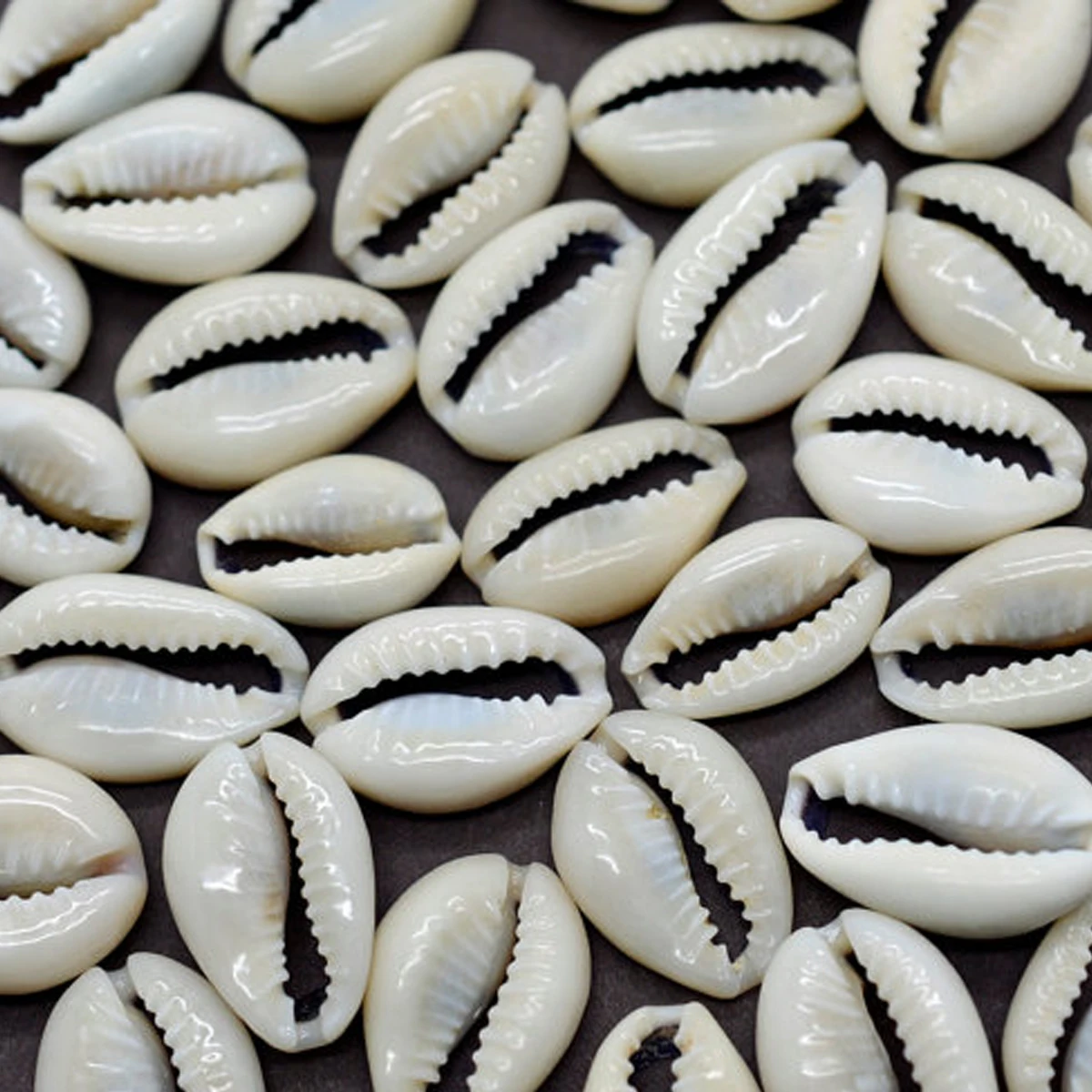
- Ancient China (Cowry Shells)-16-18th BC
- Charge it card -1946
- Bitcoin - 2009
Cowrie Shells:
Cowrie shells were used in all parts of the world; however, what we would focus about is its use in Asia, the modern classical character in Chinese for money is actually a resemblance of a Cowrie shell. It was not only used in China in Asia but also in India, needing 3840 to make a singular rupee.
Charge it card:
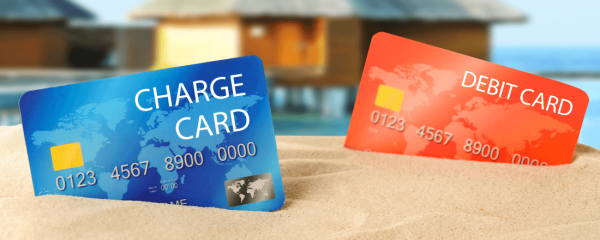
To use a 'Charge it Card' is used much like debt and are to be paid by the month. Unlike how 'Credit cards' work in which the debt is carried on over, and coming also with an interest. Commonly 'Charge it Cards' do not set a limit to what it can be used for, these companies usually get their income from the transaction value from the merchant fee.
Bitcoin:
It may be more familiar rather than the two options that have been given above, Bitcoin is a cryptocurrency that can only be used online. Unlike the "normal" currency it does not have a central bank. Being that it is highly used in illegal transactions it has been criticized a lot.

Charge it card:
To use a 'Charge it Card' is used much like debt and are to be paid by the month. Unlike how 'Credit cards' work in which the debt is carried on over, and coming also with an interest. Commonly 'Charge it Cards' do not set a limit to what it can be used for, these companies usually get their income from the transaction value from the merchant fee.
Bitcoin:
It may be more familiar rather than the two options that have been given above, Bitcoin is a cryptocurrency that can only be used online. Unlike the "normal" currency it does not have a central bank. Being that it is highly used in illegal transactions it has been criticized a lot.
Tuesday, March 17, 2020
BST: MONEY, MONEY, MONEY, WHAT'S SO FUNNY IN THE BIG MAN'S WORLD?
Moving on from enterprising and entrepreneurship, money is the next topic that we have moved on into. In the first session, we have been starting to learn more about money; however to understand money deeply and to fully lean the 'secrets' and deep knowledge of it we need to know the basics. By means of learning what money is, what is money, why do we use money, how is the money used, why it is used? We were tasked with explaining what we have learned in this session, a video was used to further understand the meaning of money. Link
There are many questions that surround the topic of money, being that money is fundamental to an organized society; using money as we have been having for the last millenniums, is what make us be as sophisticated as we are now. Previous to the usage of money a bartering system was used instead this made it more complex as the item and the value of certain objects were not set. When 'money' came the prices were set making exchange and trade of products and good simpler than what it used to be.

There are many questions that surround the topic of money, being that money is fundamental to an organized society; using money as we have been having for the last millenniums, is what make us be as sophisticated as we are now. Previous to the usage of money a bartering system was used instead this made it more complex as the item and the value of certain objects were not set. When 'money' came the prices were set making exchange and trade of products and good simpler than what it used to be.

Friday, March 13, 2020
BST: Kiwi Ingenuity
In this session of our BST, we are again once more looking at 'Kiwi Ingenuity'; however, in this case, we are looking at a question which asks, 'How does Kiwi ingenuity benefit New Zealand as a nation'. To answer this question we need to look at several factors that make this possible, do we even benefit from it? To simply answer, yes we benefit from this a lot; Kiwi ingenuity helps this country [New Zealand] develop, there are several things that have made NZ known to the world. One of my opinions has made us, NZ known is, Bungee jumping. A.J Hackett invented and introduced the commercial Bungee jumping. Which is quite well known today, thousands of people coming to this country, with the reason being that they want to experience Bungee jumping. We benefit from this as because of this the GDP of New Zealand has become larger and larger; this supports our human development, giving us a better way of life. Education is given to us, free health care to an extent, our security and our political structure are better. Having a better government, a better life, the benefits are almost endless!


courtesy:http://www.yourarticlelibrary.com/education/human-development-development-in-economic-social-and-cultural-spheres/20887
http://seektheworld.com/top-7-places-to-bungy-jump-in-new-zealand/
courtesy:http://www.yourarticlelibrary.com/education/human-development-development-in-economic-social-and-cultural-spheres/20887
http://seektheworld.com/top-7-places-to-bungy-jump-in-new-zealand/
Tuesday, March 10, 2020
Business Studies: Products to be Improved
The past few sessions on our BST Business Studies were spent in trying to think like an entrepreneur. A way of being "like" an entrepreneur was improving and thinking of better ideas, products that we could improve upon. We had several ideas or products that we think could be enhanced and make better; however, two have in our opinion have stood out. (The activity was done in groups at our table); an idea that a group member has thought about was a digital table, however, after some friendly-argument disagreement, it was decided on that it wasn't such a good idea. For one the amount of money needed for making such a product would've been huge, also it wasn't as versatile as we would like. There were several more, however, again, as mentioned there were two that stood out for us.
The first one is that we wanted to change/improve the function of an adaptor; being that at times we buy electronics from other countries, it is almost unavoidable that the plug would be needing an adaptor. However, we as a group have experienced that universal adaptors do not work all of the time. That leads us to the idea of making an adjusting adaptor; the power connector can be adjusted to the type of socket, not only the plug holes of the adaptor can also be adjusted. Which then makes the product, "The Real Universal Adaptor".


Secondly, which is also the last, is that we found that biodegradable bins can also be changed for the better. This idea came from learning about the 3 R's, the biodegradable bin is portable and easy to store. But the main idea of this product is so that organic materials are broken down; by breaking biodegradable foods it turns them into a more efficient fertilizer. The processed [by means of a metal elesi/ "like fan blades"] biodegradable material that are not needed any more, orange/fruit peels, scraps of food are made into fertilizer that can be beneficial to making a garden, making rich soil and for farming. "Bio-Lizer".


Subscribe to:
Posts (Atom)