Pages

Showing posts with label Maori. Show all posts

Monday, November 1, 2021

Pepeha: My Mihi

Looking back I have created a 'Mihi' in the past. During lessons before we looked at the Maori culture, this involved, Waka, Iwi and the culture that surrounds the people of New Zealand. Included in this are Mihi--Pepeha. I have revised some parts of my Mihi,, though the old Mihi will be included. 

Separated into groups we also looked --our group-- specifically on the details about Iwi. 'Iwi means bones--relevant background and line of descent. Ngati means “descended from” usually heard when [before an ] Iwi is mentioned. It was important to tell others where one came from and so a “system” was created. They would identify with a mountain, an ocean, lake and land around their area of tribe.'

Old Mihi:

Revised: 

Ko Arayat toku maunga

Ko Pacific toku moana

Ko Pampanga River toku awa

Ko Pampanga toku rohe

Ko Santiago, Sangalang tōku ingoa whānau

Ko Axle toku ingoa

Nō reira, tēna koutou, tēna koutou, tēna koutou katoa.


Friday, June 25, 2021

Matariki

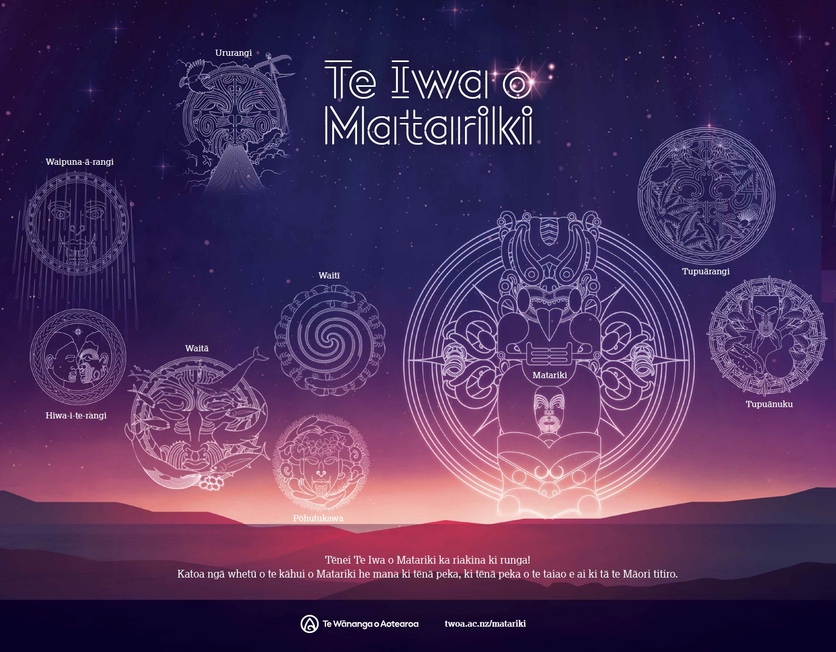
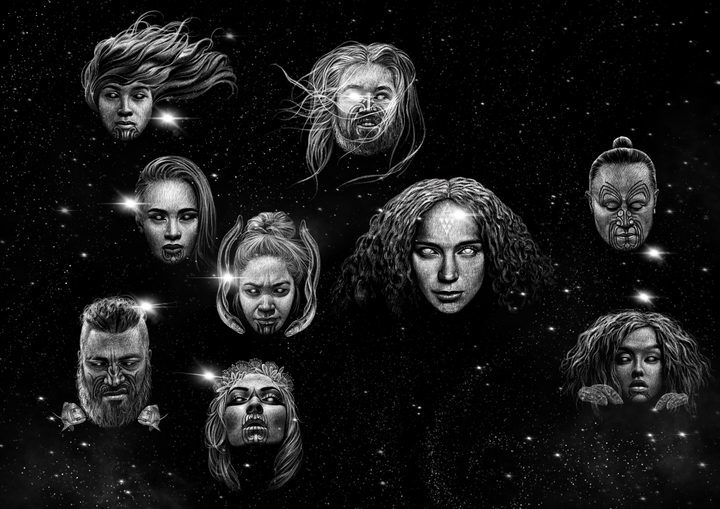
In the recent celebration of Matariki--we come to review some of our previous knowledge of this topic. This year the celebration of Matariki lies between the 19th of June/late June and the 11th of July/early July. Matariki-- a cluster of stars [9 stars] that from the eyes of a god.
Sciblogs | matariki Archives - Sciblogs
--------
MATARIKI- The-eyes-of-Tawhirimatea -- courtesy: Twinkl

In the beginning of time there was nothing, no earth, sea or sky just, Te pō,  darkness. In this Te Kore, nothingness, Ranginui the sky father and Papatūānuku the earth mother came to be. They lay together in a tight embrace. Together, they had many children who were all male. The sons lived between them in the darkness. As the children grew up, they wondered what it would be like to live in the light. Tūmatauenga, the fiercest of all the sons, shouted to his brothers, “Let’s kill them!”  The brothers disagreed. Tānemahuta, the god of the forests and birds, had a solution to the problem, “We will push them apart, Ranginui will be in the sky above us and Papatūānuku will stay below us so she remains close.”Rongomātāne, the god of cultivated food, tried to push his parents apart. He pushed and pushed with no success. Then Tangaroa, the god of the sea, and Haumia-tiketike, the god of wild food joined him. Together they pushed and pushed but still their parents would not let go of each other. Eventually, Tāne tried. He placed his shoulders on his mother and his feet on his father and pushed hard for a very long time. Rangi and Papa called out in distress, “Why are you doing this?” 
“Please don’t separate us.”  Tāne continued to push with his strong legs, until finally Rangi and Papa were prised apart.
The children were excited to finally have light and space to move. Tāwhirimātea, the god of the wind, was angry about the separation. He could not stand to hear his parents in pain, or to see the tears coming from Ranginui.Tāwhirimātea was so angry that in a rage he threw his eyes up into the sky. 
His eyes are now known as the stars of Matariki. 
The Matariki star cluster — Science Learning Hub

The story above is what we've read and a factor which we have used as a way to understand Matariki-- as well as its origins. Whilst doing so we would also learn such in the form of learning the clusters themselves and what they mean--at least in the beliefs.
-Matariki--people’s health and wellbeing.
-Tupu-ā-rangi--things that grow up in trees, including fruits, berries and birds.
-Waipuna-ā-rangi--rainfall.
-Waitī--freshwater bodies and foods from these waters.
-Ururangi--the winds.
-Tupu-ā-nuku--food that is gathered/harvested from the soil.
-Waitā--the ocean and foods that come from it.
-Pōhutukawa--those who have passed on.
-Hiwa-i-te-rangi--attainment of goals or wishing star.
The Matariki star cluster — Science Learning Hub


Thursday, September 5, 2019

Poutini and Waitaiki

This week in Maori we began learning more about Maori legends. Specifically the story of Poutini and Waitaiki. After being read by the story, thereafter we had to summarise what we had listened to. It outlines and explains pounamu; a type of jade-greenstone.  In our summary per se, we had to write as if we were one of the characters in the story. I had picked to write as Poutini as I already had a thought of how I would write such as that, and so I did.

Here is the "story" that I wrote:
“Waitaiki, Waitaiki, Wataiki… With skin as soft as feathers; as smooth as the smoothest of stones, hair like that of silk, her lips of that of blood, Waitaiki, Waitaiki, Waitaiki....
The sea flows against my body, slithering to the rivers and through the waters, I Poutini the guardian,  was of great lust for a woman, Waitaiki.
I fled across the water and within I found her, the woman epitome of beauty.  She stood there, skin exposed, she bathes; I, who lusted took what I lusted for, carrying her through rivers, passing water and the cold, gelid airs and winds. Shivering she began to, I felt her body shake to the breeze, I’d stepped onto the beach and lit a tranquil like warmth, fire. There I had warmed Waitaiki, again we went rushing to waters, where I had stopped again to give warmth. Off we went once more, fleeting, stuck on an end. Not a chance of escaping with my Waitaiki; on the stream there it happened. Turned into my essence, a pounamu, a woman-stone, Waitaiki, Waitaiki, Waitaiki…”


Image result for poutini and waitaiki


I enjoyed writing this short "verse", it was quite amusing when I started to think about being that character and how it would be set up. Not only that I enjoyed writing, but as well as being able to listen to this incredible legend.

Thursday, August 22, 2019

Maori Class

This week we started to learn to make hangi, we watched a video which was a humorous animation about making hangi. We then looked at making a step by step "tutorial" on making Hangi;  not only that but read a brief history of hangi in Aotearoa, as well as learning about what is hangi. In the past moas and seals were the most common to cooked in a hangi; however today, more sustainable sources,  chicken, pork, beef, etc. Umu and Luao are also very similar to a hangi, quite identical to the process of cooking. They are cooked underground and use a very similar form of heat.

In making our presentation, we paired into groups of no more than three. In our groups that is where we made our diagram; as well as where we answered questions and read about hangi. I made most of the diagram while my partner answered the questions. The questions were more or less about the brief story about hangi.

Here is our step by step "diagram" of making a hangi:


Thursday, August 8, 2019

Ko Au/Ta Moko

This week in Maori we started to learn about Ko Au/Ta Moko, as well as Mataoro and Niwareka. We watched the story of Mataoro and Niwareka; after watching the video we then looked at how the story can be summarized. And so we started to summarize and take the main parts of the story together which is basically summarizing. The summary wasn't very long, only about a paragraph long; after the summary, we then, looked at the different designs of the Ta Moko and in a template, we got to make our designs. I looked at some designs on the internet and incorporated it into my own.

Summary:
Link