In this subject, we are to look at the digestive system of the body. Starting from the ingestion, from the mouth, teeth and saliva up the exit which is the anus. We look first at the teeth, with types such as the incisors, molars and canines. With that lesson as well we look at the type of animals that uses such types of teeth, at least primarily. Aside from that, we look at the organs in which we use to digest and absorb our foods. In combined with that we look at not only how we digest, ingest and egest but also nutritional needs of our bodies that are needed for us to survive. However, what we have created a DLO about are only the digestive system containing the organs, as well as the teeth.
Showing posts with label Hurumanu 2. Show all posts
Showing posts with label Hurumanu 2. Show all posts
Friday, November 27, 2020

Wednesday, November 11, 2020
Humanu 2 - Film Sudy : Coraline
In continuation of analyzing the film. We start to dig deeper into understanding the characters within the story. Having the knowledge of what they faced and how they have reacted with their problems. Each of the characters introduced has had at least momentarily presented a personal problem about themselves or those who are around them. My interest in the characters varied but there were two that I quite liked to be that character design or their interesting personality. Those being Mr Bobinsky and Other mother. We were presented with the task of completing a chart in which explains their hardship and how they reacted, as well as what it makes them to be.

Task:
What am I learning?
Currently, I am learning to understand certain characters in Coraline, what they face, their personal problems, how they react and what their reactions show them to be.
How does this work show my learning?
This work shows my learning in the method of a slideshow, the written work shows what I have understood so far in determining their characters.
What am I wondering?
With my current thoughts, I am wondering about their youths, the other mother as well as how Mr Bobinsky was when younger.
Friday, November 6, 2020
Hurumanu 2: Film Study 'Caroline'
Following what we have learnt so far. Being that the lighting, atmosphere, colour and music, we have now looked and analysed the plot of Caroline. In by doing so, we have successfully created a timeline in which we can show to demonstrate what we have understood from the story, characters and some of the changes that occur throughout the film. As a class, we were to construct an overall time-line in which we can use as a foundation to make our own show our personal understanding.

The task:

Timeline:
Made with Visme Infographic Maker
What am I learning?
The current learning that I am doing is to learn how to analyse a plot. In addition to that, I am also learning how this can be represented in a timeline.
How does this show my learning?
The DLO--timeline-- that I have manufactured shows the thoughts and understanding about what happens through the movie. Where the correlation between the plot and characters affects each other.
What am I wondering as a result of this learning?
I am wondering what other details Caroline has that goes unnoticed, within those details what do they mean?
Hurumanu 2: Science - Heart Dissection
What have we been learning about?
"This heart dissection really sums up most of what we have been learning. The circulatory system relates to the blood which relates to the heart, the respiration system. Everything connects together because they all lead to the heart, that why this heart dissection is important. The first thing we learned about, mainly relates to the blood was the circulatory system. It is a system that spreads or permits the blood to circulate within the body. This is to make sure the blood along with its nutirients and minerals is successfully able to transport all over the body. If we don't have a circulatory system our blood wouldn't be able to transport the nutrients our body needs. This is because of gravity, our blood would just be at the bottom of our body.
We had also learned about the parts of the heart, as you probably know on a diagram you usually see red and blue veins. The blue veins [represents] carrying deoxygenated blood and the red veins are carrying oxygenated blood.
On the right side of the heart is where the deoxygenated blood needs to go through. It has less muscle because it only needs to get through to the lungs to get oxygen. Then it will come back to the heart as oxygenated blood, to be put on the left side the being pushed throughout the whole body. This is why the right side only has a little amount of muscle because the lungs are very close to the heart. On the other hand, the left side of the heart needs more muscle to push the blood throughout the whole body. "
Why are we dissecting a heart?
We dissected the heart because of our views about the heart. So far we have only looked at diagrams, which can vary and be different from what a real heart would look like. Being able to analyse such would be beneficial in our knowledge abut the heart.
What are the parts of the heart? did you see them?
Most of the hearts that were given to us to dissect did not have the atrium, the tubes. This was because how the hearts were butchered, when butchering the heart the usual process is to take the atrium out and leave with only the ventricles. Ours was a special case in that the tube from the atriums were able to be viewed. Two tubes connected into the ventricles. We then analysed the thickeness of the parts of the heart. In doing so, we were able to distingush the right from the left ventricle. The left ventricle was sgnificantly thicker as it has to work into pumping the blood around the body. Whilst the right only pumps to the lungs. The valve was seen as well, it is used to separating the oxygenated and deoxygenated blood. To successfully do that it would need to be strong as well as thick. The veins and the arteries were able to be seen as well, with the veins bringing back the blood to the heart as well as the arteries [Aorta] transporting the blood to the body.
Did you enjoy the dissection? why/why not?
I very much enjoyed the activity of dissection as it gave me and my peers experience. I enjoy being able to "dissassemble" parts of a whole. This would make it so that we can understand not only what the subject is but what it contains.
Here is a short clip of our hard dissection. (it is muted as there was a lot of background noises)
Wednesday, October 28, 2020
Coraline: Colour and Lighting in the Worlds
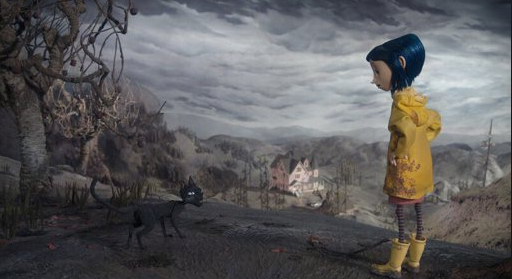
The difference between the colour of both of the worlds has contributed much to differentiate them from each other. The lighting that was used for the ‘real’ world at the beginning of the film was set into a colour theme that is quite dull. Dullness, it does not satisfy our views, nor does it satisfy what Coraline wants (as she is the only the real vibrant colour within the world). By doing so, we can infer quite quickly that the world that Coraline resides in is not the most inviting. The lighting was minimal, more so it was also cool. Including, grey, blue and pale. Many of the scenery was were also not very stimulating. At the very least it can stimulate the mind with its mysteriousness, yet, what should be given is that this place is not much for curiosity. The usage of such, the ‘Pink Palace’ the house should be one that will be something loved not by its mysterious, creepy, eerie feeling but a feeling of warmth and “home”.
The ‘other world,’ it felt, at least within the introduction, warm. The essence of lighting and colour was welcoming and inviting. Coraline fits in. It copies a feeling that is felt when we enter our houses and or places where we feel we belong. It feels very similar to home, it is somehow nostalgic. Not only does it feel very similar to home but also looks quite similar to many of the houses. The naturalistic lighting, which would’ve felt quite differently to a colour that was “blank” per se, like white. Natural colours--we tend to adore and enjoy such colour, feel at ease comfort whilst viewing them. A worth to mention the detail that adds to the feeling of home for Coraline was how the ‘other mother’ dressed. She copied how her real mother dress though more proper. This would then, later on, change quite dramatically.

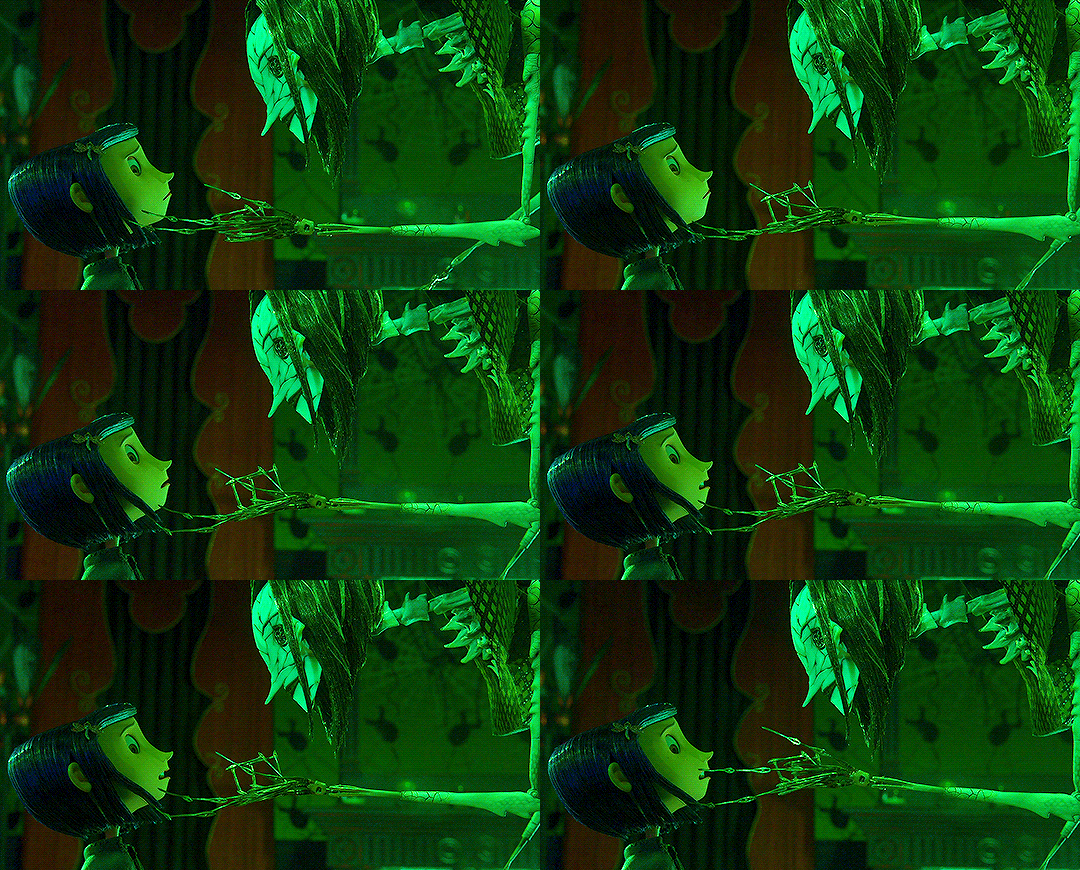
As Coraline continued to enter and exit the other world she felt quite comfortable whilst doing so. But, the time matures and so does the intention shows. While Coraline continues to go back and forth the ‘other mother’s’ dress changes. It would then turn into skirts which got shorter, more grand and outlandish. At the scene that she was offered the buttons for eyes subsequent to refusing so, the feel and colour changes slightly. This would only get much sinister as the time passes. The lights began to look more artificial, brighter, more saturated lights. Which turns from the other end of the spectrum to the other. The warm colours began to mix with colder ones, turning the lighting purple, still somehow inviting as it has an undertone of a warmer atmosphere. However, this soon transitions onto a very baleful green, a colour that is often viewed as the epitome of disgust. At the very climax of the film the colours ventures into the colour of black and white, a symbolism for the only two outcomes from the clash which we later know that it resulted in Coraline’s victory.

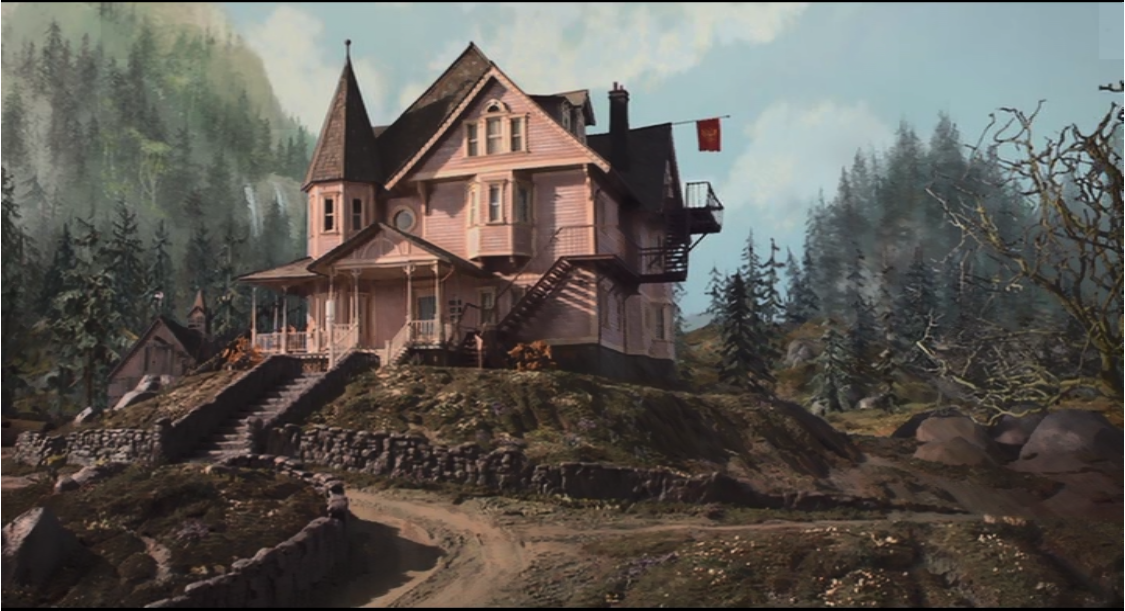
Finally, we come to the conclusion of the film. Where Coraline finally realises her misdeeds and how she wasn’t contempt. By realising so she begins to think differently about the world is more grateful and thankful for the things that she has in her life. This is shown through the then colours that the ‘Pink Palace’ changes into. Before such a scene we also see the garden, though may not be as better looking than the ‘other world’s’ garden, it began as a new start for the characters. The characters also wore more vibrant colours, looking much proper than they were before. On the concluding shot, we see the ‘Pink Palace’, the dullness and the paleness of the colour that it was before changes. Almost as if it was cleaned, as if before a bad filter was implemented on it. The sky also changes, the grey overarching clouds were removed; revealing a blue clear sky. This comes as the resolution of how the lights have changed over the course of Coraline.
Thursday, October 22, 2020
Hurumanu 2: Film Study
Through the course of this hurumanu, with the part relative to film study, we have again commenced on a new task. In this task that has been completed, an explanation and paragraphs were to done to elucidate the shots and methods that were used to make Coraline. What was done was to create a SEXXY paragraph to show what we have analyzed in the screenshots that were provided. 3 shots were to be explained, detailed and understood.
What is a SEXXY paragraph?
Step One- For your Statement you need to state the technique you wish to discuss in relation to your image.
Step Two- Then you need to describe the Example for the reader (remember they may not have seen the movie so you need to give detail so
they can follow your argument).
Step Three- Then you need to Explain the PURPOSE this technique has on the viewer.
Step Four- Then you need to Explain the EFFECT this technique has on the viewer.
Step Five- You can then link your ideas to your main argument, to another moment in the film or to the wider context.

Link to the paragraphs:
What am I learning?
I am learning how the movie Coraline has used camera shots and cinematic methods to move the plot in an interesting and an exciting way.
How does this show my learning?
With the digital learning object that I have created, I have presented a work that functions as a tool that can be understood. It shows what I understood as a result of my learning and comtemplating upon the topic that was to be completed.
What am I wondering as a result of this learning?
The current wonderings that I have is what scene in the entire Coraline have I missed that I would consider to be the best shot, best frame?
Sunday, October 18, 2020
Hurumanu 2 Science - Arthritis
In our science, Hurumanu 2 we have begun to look at the human body. This includes the skeleton, bones, muscles, circulatory system, blood, etc. Lately, we also began to look at a disease that could affect parts of the human body, that is Arthritis. A 'group' of diseases that affects the joints, including a type that was represented as an attacking demon. Gout is an intense pain that is under the types of arthritis, describes as and extreme pain that is said to put your foot on fire. In the task, we are to look at the two most common types, cause, treatment as well as risks. I have completed so by creating a poster to showed what I have gathered.


Thursday, October 15, 2020
Film Study: Hurumanu 2 Task 3
The study of films continues. After the 2 tasks that were finished after the watching and the review of Coraline has been finished. What is focused on now is the theme and the idea that surrounds the movie and its plot. The messages, meaning and what happens in the movie. We first look at the theme, it relates to the genre, what is the genre of the film; also what is the message that the director is trying to get across. How, or even do the actions in the film have meanings, what are they? We look at a couple of messages/mottos per se, "Looks can be deceiving" & " Bravery is doing things, even when you are afraid." Then relating such to the scenes that happen through the film, as though they are evidence.


The task and completion:


What am I learning?
The study of looking at the meaning and critically thinking about films, videos, clips. Then connecting with the ideas that inserted byways of films.
How does this show my learning?
This work shows my learning through the poster that I have made. A summary of what I have understood through the thinking and looking at the details and messages of the film.
What am I wondering as a result of this learning?
Currently, I am wondering how many meanings can be inferred within a singular action. What more in a movie such as this one.
Tuesday, September 22, 2020
Huruamnu 2: Hands
In this hurumanu, in the science section, we begin looking at the bones, tissues and muscles that make up the hand. For this, we have then learned about what the parts that make the hand; tendons, bones, cartilage, joints, ligaments, muscles and skin. What we have understood is the function of each. Tendons, they are what connects the bones onto the muscles, contracting and relaxing, moving. Bones are the whitish tissues that make up the skeleton of a human. Cartilage, within in each joint (a junction in which bones meet) there is cartilage, it is a connective tissue that keeps the bones from rubbing together. Ligaments, similar to the tendons, however this instead of connecting bone to muscles, connect bone to bone. Finally, the skin is the largest organ of the body, protecting it from microbes, elements, permitting the sensation of toucha s well as regulate our temperature.

As we have completed the study, we then look at making a "hand". Made by cutting paper in a shape of a hand, tubes are then cut out to represent the bones of the hand. Each of the fingers aside from the thumb contains 3 bones whilst the thumb contains 2 bones. After the tubes have been placed accordingly at the cutout hand, cut stings and attach it to the end tube which is to be at the fingertips. Thereafter, insert the strings inside of the tube leading into a point which leads to the wrist.

Wednesday, September 9, 2020
Huruamnu 2: Film Study - Task 2
This rotation in our Hurumanu 2 we have bot been looking at science and film study. In this blog, we focus on film study and the tasks that are involved with this topic. With the said tasks, we come into our second tasks in which focuses on camera shots, angles as well as movement. For this we are given a variety of different shots, angles and movements; we are then to arrange them in a way that connects into their right places. Thereafter we transfer into making our presentation into which we can present what we have created online.

My presentation: https://my.visme.co/view/q6jp4rke-visual-techniques
What am I learning?
With this topic, I, personally have learnt a great deal about cinematography. For such I have then encountered a vast range of shots that I haven't even noticed when watching a film. As such I have also learned how each of this shot could be used to convey an emotion. Within the likes of a low angle shot, it conveys a feeling of greatness, a threat, while a high angle conveys, weakness and fragile. Looking s well in the older films I began to realise how the shot of say, "The Shinning"(Stanley Kubrik), most of the frames are like a work of art, with the placement of the camera and view. The same can be said for the ingenuity of Alfred Hitchcock with his usage of shots and angles.
How does this work show my learning?
The presentation shows my working in by putting in what I have learnt within each of the shots, angles and movement. By my understanding of each of the shots, angles and movement; I have looked within several of the films that I have watched and have analyzed and put in shot in accordance with the category.
What am I wondering as a result of this learning?
Within my current knowledge that I have acquired, there are several wonders that I ask. How many kinds of shots are used in a film? How many shots and changes are too much? How could the arrangement of certain shot have a totally different effect from a singular?
Hurumanu 2 Film Study - Task 1
During the Film Study part of our hurumanu, we are to look at 'Visual and Sound Techniques' that used in cinematography. These are very much fundamental in creating a good film. Knowing which, identifying and choosing the right techniques could be the deciding factor in the rate and the quality of the film. In this task, we are to look at the many different 'Visual and Sound Techniques', identify so and explain each of them. For this task, I have created a 'dictionary' in which store the data that I have collected into researching into this task. The data that is collected contains the meaning of each term that has been given to us for research and study.

Presentation: https://docs.google.com/document/d/1DW5xjUG4DB553E875VThNp0txEkRWzjJvuK5PiC5nZw/edit?usp=sharing
What am I learning?
Learning about the many different ways in which visual and sounds are used in a film. Varying from the change of mood, feeling and the characters that are present in each scene. It is fundamental that these are used in making a successful film, knowing how there put, and understanding why is also a factor in such.
How does this work show my learning?
By collecting the data and putting what I have understood into the research that I have done; I have compiled such in a manner that is for everyone to see.
What am I wondering as a result of this learning?
With such, I wonder about the different ways in which these can be used. How these came to be? Was there a traditional, cultural or at all any story into which these are in this era?
Subscribe to:
Posts (Atom)