At the end of this term, we had outside school activities, the previous activity was going to 'MEGA Air'. The most recent one, however, is our visit to Orana Wildlife Park. I have visited the Park quite a number of times however each and every time is special. I learnt more things about the environment and our global issues, that we are not only faced by "less intelligent" animals but us as well. I got to see animals again, I love animals, reptiles general to be more specific snakes, I also love sugar gliders and canines, birds [ravens], well, I love them all. During the visit, we had a break before doing the tour, and off we started. We looked at quite a number of animals, some very briefly, but at times there were a few intervals where we could just appreciate the sight of these magnificent animals.
There were some of which I would call my favourites, most liked. I liked the 'fat unicorns' also known as rhinos/rhinoceros, seeing the great apes was quite enjoyable as well. Observing their similarity to use Homo Sapiens, I thought of how much 2% of DNA can get a very different result; which makes me wonder about "Aliens" per se and how even if the change is only by a small percentage, how "smart" they can be and how much different they could be from us.
I enjoyed the Orana Wildlife Park visit, I would gladly visit it more in the future.
Here are some images that were taken during the visit.
I am a student at in Uru Mānuka. In 2020 I was a year 9 and in 2021 I will be a year 10. This is a place where I will be able to share my learning with you. Please note....some work won't be edited - just my first drafts, so there may be some surface errors. I would love your feedback, comments, thoughts and ideas.
Showing posts with label Term 3 2019. Show all posts
Thursday, September 26, 2019
Orana Wildlife Park visit
Monday, September 23, 2019
Musical Indrustries: Music Suite
At the same day that we continued on our songwriting, we also went to the music suite. While we were in the music suite, several activities were set for us to do. In those activities, we had some challenges to complete so that we would finish the list. One of the challenges was playing "Havana - Camila Cabello" on the keyboards; quite simple, it wasn't too challenging as it was only set for the right hand. There were several instruments, around the music suite, each with their own complexity of playing. Drums both classic and electric, saxophone, flute, electric guitar, acoustic guitar, piano, ukulele and as mentioned before a keyboard.
The experience that we had been able to play quite a range of instruments was really enjoyable; I would very much like to try more instruments and see how each varies from each other.
Musical Industries: Song Writing
In the previous week, we have been started making our own individual songs. However, before writing, we have first looked at song lyrics that we could take inspiration from; how each should be layered. (First verse, chorus, etc...)[Bohemian Rhapsody would be one of the exceptions to that, as it contains not, lyrics.]
When I started writing the chorus which I did first, I brainstormed what I really liked, what type of genre that I would be doing, the melody of the piece and generally the type of song that I might write. I thought of my chess set [I really love chess], from there I built on, I "named" my chess set Aurora, which is also ironic because not only is it my chess set's "name" but also my great grandmother's name, both of which and whom I love very much.
As I was writing the verses I began to think about the melody of the song, how would it sound? After finally getting the melody sorted, I continued the songwriting part. Finished with the songwriting, at home I started and is currently composing the song; the chorus has been sorted, for the right hand at least [piano], the rest I am working on.
I really enjoyed writing the song I would love to do it again.
Here is the song:
When I started writing the chorus which I did first, I brainstormed what I really liked, what type of genre that I would be doing, the melody of the piece and generally the type of song that I might write. I thought of my chess set [I really love chess], from there I built on, I "named" my chess set Aurora, which is also ironic because not only is it my chess set's "name" but also my great grandmother's name, both of which and whom I love very much.
As I was writing the verses I began to think about the melody of the song, how would it sound? After finally getting the melody sorted, I continued the songwriting part. Finished with the songwriting, at home I started and is currently composing the song; the chorus has been sorted, for the right hand at least [piano], the rest I am working on.
I really enjoyed writing the song I would love to do it again.
Here is the song:
Chorus:
Aurora, Aurora,
Aurora I sing, this song to you.
Aurora, Aurora,
Aurora I sing, this song to you.
First verse:
Aurora...
I glee with joy, I dance with pleasure,
The ecstasy for me!
Your gaze, your look,
Your act, your moves,
All of it, for you, behoves.
Aurora, Aurora,
I sing this song to you.
Aurora, Aurora,
I sing this song to you.
2nd Verse:
The first time we meet,
Some years ago,
Your moves I didn’t know.
Time flew by,
Never say die.
It was rain or shine
But I did not resign!
Aurora, Aurora,
I sing this song to you.
Aurora, Aurora,
I sing this song to you.
3rd Verse:
Your gaze, your look,
Your act, your moves,
All of it, for you, behoves.
Never say die.
It was rain or shine
But I did not resign!
Aurora, Aurora,
I sing this song to you.
Aurora, Aurora,
I sing this song to you.
4th Verse:
As we advance, as we progress
As we enhance, as we impress.
My love for you has not degrade,
My love for you has not betrayed.
Aurora, Aurora….. Aurora!!!!!!
Tuesday, September 17, 2019
Ki O Rahi
These past few weeks [in P.E] we have been learning and playing Ki O Rahi; Ki O Rahi is a sport played in New Zealand, it is a fast-paced game containing many positions and tactics. We have been playing and training per se, about Ki O Rahi, it is a very enjoyable, skilful game. While playing the game we have also been researching about this topic as well. I have learnt quite a lot about the story and the culture of Maori in general, I also learnt several Maori words through Ki O Rahi. Playing this traditional Maori game has thought me a lot about using different methods and trying different tactics. I very much enjoy playing more of this game.
Tuesday, September 10, 2019
Ella West Visit
This week Ella West has now visited our school; in the first period of the day, all of the 7&8 classes went into our auditorium to listen to Ella West. She talked about her life and what she does; she also talked about her books. The first book she started to talk about was 'Night Vision'; as she listened we learnt how she got the idea for writing the book. 'Night Vision' she said, was inspired by a documentary that she had watched which featured people with genetic conditions; there she found out about XP, Xeroderma Pigmentosum. It is a condition where the skin of the individual is sensitive to UV rays, especially the sun, therefore she has to stay inside most of the time and has to take vitamin D pills. Ella West then mentioned that she wanted for the character to have a big event to happen in her life, and so she decided for the character to be a sole witness for a murder. However, it needed to be big enough to see in the dark, as the main character is only able to come out at night. A car fire was then decided and the rest was history. 'Night Vision' has won two awards since its release, it has also been translated into Italian as well.
Moving on to 'Rain Fall' is based in Westport, it is also mentioned that one of the settings in which she introduces to us in the book was inspired by the house of her friend. Utopia Road was also mentioned in the story which Ella took as a moment to insert humour in her book. As Utopia Road was not as "Utopian" like as you may think if that makes sense. Those were the main inspirations for the book and then she also mentions that she added horses, because why not? (I agree).
After talking more about 'Night Vision' and 'Rain Fall' we then transferred into asking her some questions. We then learnt that her first books were the 'Thieves' series, but it was not the first-ever story that she wanted to publish; also the first 'Thieves' had to be completely re-written. When she writes a book she usually tries to reach a thousand words a day; in a separate tab, she keeps a word count to see her progress.
After some more questions, at the end of period one, our class then had some time alone with her.
We further asked, questions; we found out more about her, her name isn't really Ella West just as Stan Lee's real name is not Stan Lee. Another thing that we learnt about her was her mother has read all of her books and she thinks that the 'mums' in the story are her as well as the 'dads' is her dad which is not quite true.
Then again after more questions, our group, which has been on of the reason that she came to our school had extra time with her. There we discussed about the ending of Night Vision which we "criticized" her for, not so serious way. She gave us advice and told us why she decided to end the book that way; in the end, we were more than pleased that it actually end in that fashion.
Ella West has brought us happiness, entertainment and inspiration, I look forward to reading more of her books in the future, 'Sound of My Heart' which is teh book she is currently writing. It has been a very, very enjoyable experience being able to get advice from authors again.
Thank you Ella West!

Moving on to 'Rain Fall' is based in Westport, it is also mentioned that one of the settings in which she introduces to us in the book was inspired by the house of her friend. Utopia Road was also mentioned in the story which Ella took as a moment to insert humour in her book. As Utopia Road was not as "Utopian" like as you may think if that makes sense. Those were the main inspirations for the book and then she also mentions that she added horses, because why not? (I agree).
After talking more about 'Night Vision' and 'Rain Fall' we then transferred into asking her some questions. We then learnt that her first books were the 'Thieves' series, but it was not the first-ever story that she wanted to publish; also the first 'Thieves' had to be completely re-written. When she writes a book she usually tries to reach a thousand words a day; in a separate tab, she keeps a word count to see her progress.
After some more questions, at the end of period one, our class then had some time alone with her.
We further asked, questions; we found out more about her, her name isn't really Ella West just as Stan Lee's real name is not Stan Lee. Another thing that we learnt about her was her mother has read all of her books and she thinks that the 'mums' in the story are her as well as the 'dads' is her dad which is not quite true.
Then again after more questions, our group, which has been on of the reason that she came to our school had extra time with her. There we discussed about the ending of Night Vision which we "criticized" her for, not so serious way. She gave us advice and told us why she decided to end the book that way; in the end, we were more than pleased that it actually end in that fashion.
Ella West has brought us happiness, entertainment and inspiration, I look forward to reading more of her books in the future, 'Sound of My Heart' which is teh book she is currently writing. It has been a very, very enjoyable experience being able to get advice from authors again.
Thank you Ella West!
Thursday, September 5, 2019
Poutini and Waitaiki
This week in Maori we began learning more about Maori legends. Specifically the story of Poutini and Waitaiki. After being read by the story, thereafter we had to summarise what we had listened to. It outlines and explains pounamu; a type of jade-greenstone. In our summary per se, we had to write as if we were one of the characters in the story. I had picked to write as Poutini as I already had a thought of how I would write such as that, and so I did.
Here is the "story" that I wrote:
I enjoyed writing this short "verse", it was quite amusing when I started to think about being that character and how it would be set up. Not only that I enjoyed writing, but as well as being able to listen to this incredible legend.
Here is the "story" that I wrote:
“Waitaiki, Waitaiki, Wataiki… With skin as soft as feathers; as smooth as the smoothest of stones, hair like that of silk, her lips of that of blood, Waitaiki, Waitaiki, Waitaiki....
The sea flows against my body, slithering to the rivers and through the waters, I Poutini the guardian, was of great lust for a woman, Waitaiki.
I fled across the water and within I found her, the woman epitome of beauty. She stood there, skin exposed, she bathes; I, who lusted took what I lusted for, carrying her through rivers, passing water and the cold, gelid airs and winds. Shivering she began to, I felt her body shake to the breeze, I’d stepped onto the beach and lit a tranquil like warmth, fire. There I had warmed Waitaiki, again we went rushing to waters, where I had stopped again to give warmth. Off we went once more, fleeting, stuck on an end. Not a chance of escaping with my Waitaiki; on the stream there it happened. Turned into my essence, a pounamu, a woman-stone, Waitaiki, Waitaiki, Waitaiki…”
The sea flows against my body, slithering to the rivers and through the waters, I Poutini the guardian, was of great lust for a woman, Waitaiki.
I fled across the water and within I found her, the woman epitome of beauty. She stood there, skin exposed, she bathes; I, who lusted took what I lusted for, carrying her through rivers, passing water and the cold, gelid airs and winds. Shivering she began to, I felt her body shake to the breeze, I’d stepped onto the beach and lit a tranquil like warmth, fire. There I had warmed Waitaiki, again we went rushing to waters, where I had stopped again to give warmth. Off we went once more, fleeting, stuck on an end. Not a chance of escaping with my Waitaiki; on the stream there it happened. Turned into my essence, a pounamu, a woman-stone, Waitaiki, Waitaiki, Waitaiki…”

I enjoyed writing this short "verse", it was quite amusing when I started to think about being that character and how it would be set up. Not only that I enjoyed writing, but as well as being able to listen to this incredible legend.
Music Through the Decades
In our music hurumanu, we have been learning about musicians and the decades, eras of music. In this presentation we have picked 6 different decades, starting from the 1900's to the 2010's. In each of the slides, we had to write about the most popular genre or genres of that time. As well as some of the most popular musicians during that specific era; from Jazz, Rock, Soul, Rap, Hip Hop, etc. There have been countless music legends through this century, making it almost impossible to choose one or even several just to put on a slide. It was quite surprising that from all the eras that I have chosen, I know most if not all of the musicians that were put in my slide. It was very enjoyable listening to the songs from each decade and how each one varies from each other. Each decade has a unique charm that makes me want to listen more and more...
Tuesday, September 3, 2019
Trash, trash, trash.....
On the last term, around the first several weeks of returning to school, we [as a class] began to read "Trash - by Andy Mulligan". We routinely read it once a week up to this week of this term. It is based [the setting at least] on "smokey mountain"; a dumpsite in Manila, Philippines, often called smokey mountain as it continually emits thick smoke from burning waste on the dumpsite. There are three main characters in the book, Raphael, Gardo and Rat [Jun-Jun]; it follows their story when they discover something that could and would change their lives forever. This book tackles world problems such as crime, poverty, corruption, politics but as well as personal problems; trust, family as well.
This has been a very spectacular book, it uses different characters for a different point of view each time. Very interesting in how it was all set out and the twist and turns as they progress towards their goal.
Monday, August 26, 2019
Famous musicians:
Name:
Adele Laurie Blue AdkinsStage name:
AdeleDecade:
2000's
Date of Birth:
May 5, 1988
Genre:
Pop, Soul, contemporary R&B, Blue-eyed soul
Famous songs:
"Rolling in the deep", "Someone like you", "Hello"
Challenges:
Adele suffered a heomorrhage in her vocal chords, luckily her voice was brought back after a surgery.
Instrumental Industries
This week on our music hurumanu, we further looked at the instruments, but this time their "families". Specifically the four main families of music, which are percussion, brass, woodwind and strings. We looked at the instruments that are parts of those families, for example in percussion, we have piano, drums, maracas, etc. Not only that but we also looked briefly on what an orchestra is. That is what we have done in this session.
Then we created a slide to represent what we have learned in this period, and the definitions of teh families and their function.
Thursday, August 22, 2019
Maori Class
This week we started to learn to make hangi, we watched a video which was a humorous animation about making hangi. We then looked at making a step by step "tutorial" on making Hangi; not only that but read a brief history of hangi in Aotearoa, as well as learning about what is hangi. In the past moas and seals were the most common to cooked in a hangi; however today, more sustainable sources, chicken, pork, beef, etc. Umu and Luao are also very similar to a hangi, quite identical to the process of cooking. They are cooked underground and use a very similar form of heat.
In making our presentation, we paired into groups of no more than three. In our groups that is where we made our diagram; as well as where we answered questions and read about hangi. I made most of the diagram while my partner answered the questions. The questions were more or less about the brief story about hangi.
Here is our step by step "diagram" of making a hangi:

In making our presentation, we paired into groups of no more than three. In our groups that is where we made our diagram; as well as where we answered questions and read about hangi. I made most of the diagram while my partner answered the questions. The questions were more or less about the brief story about hangi.
Here is our step by step "diagram" of making a hangi:
Instrumental Industries
On the next session of our music hurumanu, we further looked at different instruments; a brief quiz in which we had to name 10 instruments. After that, we then discussed some New Zealand musicians, both solos and bands. For the solo musician, I decided to choose John Clarke [Fred Dagg], I loved his NZ folk songs, I still do, very much so. I researched some information about him as well as Split Enz which was for the band part. Split Enz had many interesting songs as well, with my personal favourite is Six Months in a Leaky Boat. We wrote the information on paper in which we then transferred on a presentation.
Here is a slide show that I have done, as well as the information that I have gathered.
Hurumanu: Music
This week we have now moved on into our next Hurumanu which is music. In the first session of this subject we started with answering questions about what we know/our prior knowledge about music. Next thing that we then did was changing a our "Music Hurumanu title" to a more suitable as well as a more creative name for our group. There were several ideas, however "Instrumental Industries" is what we have chosen. Subsequent to changing the name of our group we then also looked at a variety of music. Not only music but as well as instruments; Ukulele and the different parts of it, such as the neck, body, head, etc. That has been most if not all of what we covered during the first session.
Thursday, August 15, 2019
Carbon Foot-print
My Investigation
Aim: To look at how I can prevent climate change in the future.
1. Complete the activity 'Ecological Handprint'.2. Complete the activity 'Carbon Footprint'.
3. Write down your 10 changes to climate change below. Using ideas from the Ecological Handprint and Carbon Footprint list 10 changes that you can make to stop Climate change?
- Eat less meat.
- Compost and recycle.
- Shop as little as I can and think about my choices.
- Try to use less fossil-fueled vehicles.
- Use light efficient lightbulbs and turn things off hen I get the chance.
- Garden and use what I have grown for consumption.
- Turn lights and electronics off when not used.
- Save water and conserve.
- Conserve energy and use energy-efficient objects.
- Plant trees or small plants where I can.
The Years of Living Dangerously (Film, 59 min.)
Monday, August 12, 2019
Science Hurumanu: Future of Climate Change
Aim; To look at the different ways we can prevent climate change in the future.
Changing Our Future
- Coal
- Oil
- Gas
What is the cost?
The cost is Carbon Dioxide
The CO2 level has soured since when?
During the industrial revolution that is when it all soured.
What are the effects in the UK?
- 19 out of the 20 warmest days on the record are of this century.
- Heatwaves.
- Species could disappear, meaning extinct.
How many climate refugees will there be in Britain by 2050?
There will be around 200 million climate refugees and some will be in Britain.
When will Fairborn be flooded?
Sometime in the next 26 will Fairborn be flooded.
What are some of the other things that will be 'swallowed by the waves'?
- 1.5 million home in England are at risk of being covered by the sea.
- 100,000 homes are of risk of erosion.
- 100 toxic sites could be swallowed by the waves.
- Reducing gas emissions and changing them to non-CO2 emitting energy.
- Plant 1.5 billion trees.
- Running vehicles on solar power and batteries.
What ideas are school children having about climate change?
- Protesting.
- Not having children as they might live unfair chances and the effects of climate change on then
- Reduce the amount of fossil-fueled vehicles that you use.
What is the atmosphere called?
a Waste Dump.
What is the last statement the reporter made?
We know what we need to do, we have got the technology. What we lack is the
political will.
What places will be affected?
There will be various places in New Zealand that will be affected.
What else do we need to think about?
Building structures where it is predicted that the sea-level will rise up to.
What other places around NZ will be affected?
The places that could be affected by climate change are the Pacific Islands.
What does this do to our drinking water?
More saltwater that could get to our sources where we get our fresh/drinking water.
What are the main concerns?
- Coastal flooding.
- Coastal Erosion.
What can we do?
- Take out less amount of fossil-fuels, using public transport.
- Thinking about using vehicles that are non-fossil-fuel powered.
- If thinking about building a house get it designed so that it does not waste energy.
What is the one, silver bullet solution? There is nothing, as we can not totally solve this climate change problem.
What is the mix of things we need to start doing?
- Getting to use renewable energy, solar, wind, hydro, etc.
- Solar heating for houses.
- Using non-depended on fossil-fueled vehicles,
What are 3 others you can think of?
- Reducing the amount of rubbish produced.
- Walking to the store or a location where is not very far that we cannot walk it.
- Recycle objects and try to plant more plants or even trees around the area.
My Investigation
Where does our food come from?
- Choose your favourite food.
Beef Wellington
- Upload a picture of it.
- Draw a picture of it on A4.

On your blog answer the following questions.
- Where does the food come from (e.g. is it from another province or country, was it purchased or made locally)? It can be made anywhere, but it originated in England.
- How many kilometres away did the food travel to get to you? 0 kilometres because it can be made anywhere you can cook at.
- What are the main ingredients? The main ingredients are; Beef fillet, Duxelles, Pate, and Puff Pastry.
- How is the food packaged? Beef Wellington is not really a type of food that needs to be packaged. It is sort of more restaurant and handmade food.
- What resources do you need to produce this food item (e.g. land, water, oil, food, etc.)? The resources needed are land, water, oil, and food.
- Would this item have been processed? No, it wouldn't have been processed as this dish cannot be made using machinery.
- Is there anything unique or significant about the food item (e.g. fair-trade, local)? Yes, you can use local ingredients as well as imported ingredients.
- What else do you notice about this food that affects its climate friendliness? It does not need any transport, because you can get the ingredients locally without travelling much using vehicles.
- Do you think this food is climate-friendly (Circle)? (YES) NO
- Why? Because it doesn't need any transport as such. Some ingredients could require transport however by using local ingredients it is fair to say that it doesn't need transport. However, the meat that is used from making the beef welling specifically the beef, is not too eco-friendly per se. Cows produce methane, we would be able to counteract that by making it so that methane is collected and is put to use.
- If no, what would be a better alternative?
Thursday, August 8, 2019
Ko Au/Ta Moko
This week in Maori we started to learn about Ko Au/Ta Moko, as well as Mataoro and Niwareka. We watched the story of Mataoro and Niwareka; after watching the video we then looked at how the story can be summarized. And so we started to summarize and take the main parts of the story together which is basically summarizing. The summary wasn't very long, only about a paragraph long; after the summary, we then, looked at the different designs of the Ta Moko and in a template, we got to make our designs. I looked at some designs on the internet and incorporated it into my own.
Summary:
Link
Summary:
Link
Renewable Energy
RENEWABLE ENERGY
Aim: To compare the amount of gas that is produced from different types of biomass.
Material:
- (3) Bottles
- Permanent marker
- Disposable gloves
- Cup
- Fresh manure
- Mashed banana
- Funnel
- Water
- (3) Balloons
- Vegetable peelings
Steps:
- Label all 3 bottles: 1 Manure; 2 Manure and vegetable peelings; 3 Manure and mashed banana
- Place 1 cup of manure; 1 cup manure and 1 cup of vegetable peels; 1 cup manure and 1 mashed banana.
- Fill the bottle with water but leave a space between the water and the top.
- Place a balloon on top, secure it with tape.

Investigation.
Research the following Biomass fuels. You will need to:
Write a definition of the fuel.
Write 8 sentences about the fuel.
- How is it made? Plants and trees absorb sunlight and contain it in the form of energy and can be released by burning. It's not only plants and trees but animals and humans as well, animal manure (faeces) can be transformed into biogas, they could be burned.
- Where is it made? Biomass fuel can be made and used in ReEnergy's power generation facilities, which are equipped with the right and proper equipment for burning these fuels.
- What is it made with? It is made with animal, human waste; plants and trees.
- What countries use it? Ireland, USA and Sweden.
- What uses will it have in the future? Hopefully, it could possibly be one of the primary contributors to the world's energy and could reduce our usage of fossil fuels.
Place 1 image of the fuel.
Biomass Fuel types.
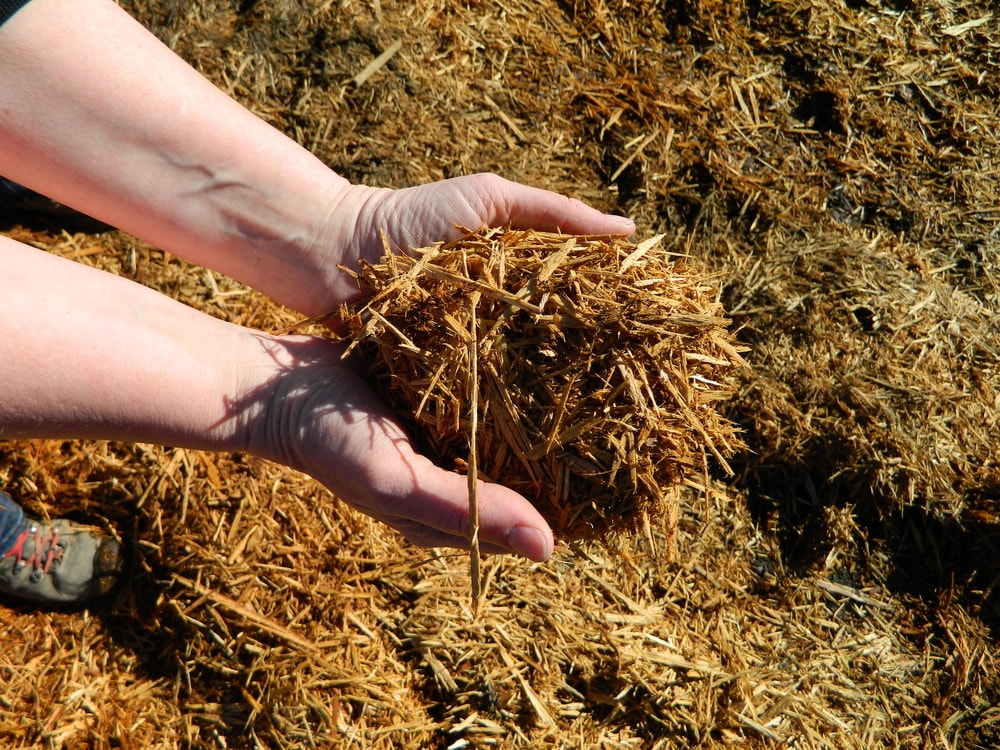
Name: Agricultural crops and wood fuels.
Definition: The use of Wood fuels to produce either electricity as well as heat. That defines the crops as well as they can be used to produce the same energy, (thermal and or electrical.)
Research:
Agricultural crops and woods fuels are a part of the sustainable energy that we might soon be using more frequently. Crops such as miscanthus have a different structure and or composition to wood and its combustion differs by how it's handled. Wood fuels, such uses are as follows: firewoods, charcoal, sawdust and many more.
Uses: It can be used as thermal energy as well as electrical in some ways.
Image:

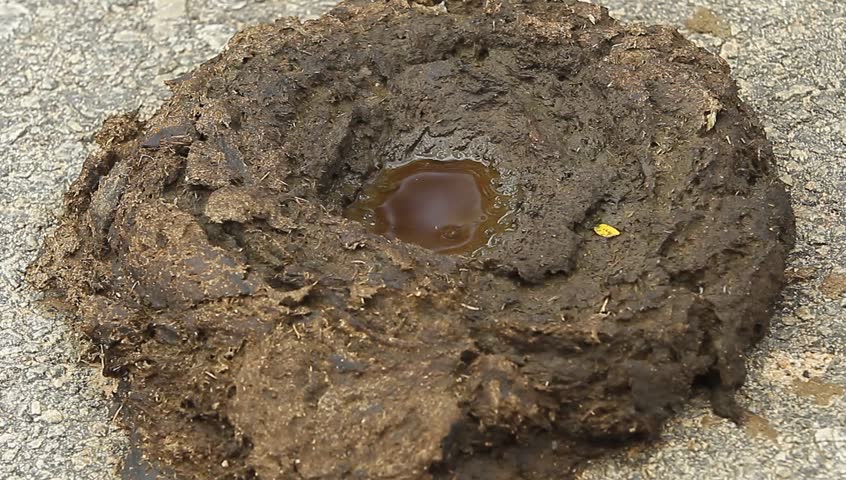
Name: Animal waste.
Definition: Animals waste can be converted into biofuel by means of drying and burned.
Research:
The common method of turning animal waste into fuels is by drying the manure and then by burning the manure. It could also be turned into biodiesel, as well as gas.
Uses: Animals waste can be turned into bio-energy and fertilizer.
Image:

Name: Biogas
Definition: Biogas is the many organic gases that is or can be produced from the organic materials breaking down; it could be manure, plant material, sewage, etc.
Research:
When organic matters breakdown, gases form, most of the gases that is obtained is methane and carbon dioxide; which could also have traces of hydrogen sulfide.
Uses: Cooking or any other type of heating purposes.
Image:

Name: Biofuels
Definition: Biofuels is simply fuels that one can deprive from living thing such as animals, plants, trees, etc.
Research: Biofuels can possibly be produced from crops, the process of producing biofuels are fermentation and or chemical reactions. The matter is then refined so that it may fuel cars or any other vehicles.
Uses: work fuel, fuel for vehicles, automobiles, truck and possibly aircraft.
Image:


Subscribe to:
Posts (Atom)