Pages

Wednesday, March 31, 2021

Making Salts II

Aim: To produce copper sulfate salt by reacting copper dioxide with an acid.

Hypothesis: By mixing sulfuric acid and copper oxide, a neutralization reaction would occur. Copper sulfate and hydrogen would form.

Equipment:

  • Copper oxide powder
  • Dilute (0.5 mol L-1)
  • Sulfuric acid
  • 50mL measuring cylinder
  • 2 100mL beakers
  • Hot plate
  • Gauze mat
  • Funnel
  • Filter
  • Paper 
  • Thermometer
  • Spatula
  • Evaporating basin
  • Stirring rod

Method: 

  1. Add 20 mL of sulfuric acid to a 100 mL beaker. Heat the acid until it reaches 70°C. Turn off your bunsen burner (in our case the hot plate). 
  2. Once heated, use a spatula to add pea-sized portions of copper oxide to the beaker. Stir the mixture for 30 seconds.
  3. Repeat step 2 until no more will dissolve. Allow the beaker to cool. 
  4. Fold the filter paper and place it in the funnel. Place the filter funnel into the second beaker. 
  5. Make sure the beaker is cold enough to hold at the top. The contents should still be hot. You may need your teacher to complete this step. 
  6. Gently swirl the contents of the beaker to mix, and then pour into the filter paper in the funnel. Allow to filter through. 
  7. Rinse the beaker you used to heat the mixture previously, and place it back on top of your tripod filled with 50-60mL of water.
  8. Place the evaporating basin on top of the beaker and carefully pour some of the solution from the beaker into the evaporating basin. 
  9. Gently heat the beaker until the solution in the evaporating basin has reduced by half. 
  10. Leave the evaporating basin to cool. Once cool, move the evaporating basin to a warm place where it will not be disturbed (i.e. a window-sill) and observe over the next few days. Blue copper sulfate crystals should form. 

Observations: As the mixture heated the colour changed. The mixture of sulfuric acid and copper oxide turned the mixture into a murky substance. The clear liquid-sulfuric acid- add copper oxide turned dark blue--filtered--lighter blue. Gasses were released, as told dangerous gases, which can blind the eyes. And so proper caution was taken 

Name of the reaction occurring in step 2: The reaction is called neutralisation. 


Tuesday, March 30, 2021

Art: Michael Mew

 In art, we have been working on works inspired by Michael Mew.  For the past several weeks we tried to understand the concept of Michael Mew's work. We created thumbnail sketches of his work in order to grasp his deliberate choices of how his art is structured. Photos were made structure for collage, there was painting that was done with, through and over the art. There are aspects of the artwork that I feel could be improved, such as the clarity of the work, though I do think that too much clarity could affect how vague I want the artwork to be. The interpretation of the art may be affected and so I chose not to do so. I have completed the artwork and is indeed quite pleased with how it turned out. If I were to inquire, what approach would you have done? What is your interpretation of my art?


Process Photos: Concept and Collage Base


"The Queen of Hearts"


E.G of  Michael Mew's works:

Monday Muse: Michael Mew


Process Slide:

Monday, March 29, 2021

Woodstock: Anti-War

 Moving from the topic of beatlemania, we then move to a period of time where the Vietnam War took place. Simultaneously the concert at Woodstock took place. Its purpose is to promote peace and love; questioning the purpose of the war, in which why fight a country from the other side of the world? What is the purpose of doing so, what is the result? We then come to the task of analysing a song that came from the time in which promotes an anti-war movement. The usage of songs and rhythms to influence the public of peace and love. We are to choose from a variety of songs, however, by choice, I chose 'Give Peace a Chance' by John Lennon - seemingly continuing from the topic of Beatlemania.


Opinion | What Was the Vietnam War About? - The New York Times


Give Peace a Chance-- the lyrics:

Ev'rybody's talking about
Bagism, Shagism, Dragism, Madism, Ragism, Tagism
This-ism, that-ism, is-m, is-m, is-m
All we are saying is give peace a chance
C'mon
Ev'rybody's talking about Ministers
Sinisters, Banisters and canisters
Bishops and Fishops and Rabbis and Pop eyes
And bye bye, bye byes
All we are saying is give peace a chance
Let me tell you now
Ev'rybody's talking about
Revolution, evolution, masturbation
Flagellation, regulation, integrations
Meditations, United Nations
Congratulations
All we are saying is give peace a chance
Ev'rybody's talking about
John and Yoko, Timmy Leary, Rosemary
Tommy Smothers, Bobby Dylan, Tommy Cooper
Derek Taylor, Norman Mailer
Alan Ginsberg, Hare Krishna
Hare, Hare Krishna
All we are saying is give peace a chance


The song's meaning and purpose is to ask the questionable choices of the nations into colliding into war.  How technicality and politics have exploited the choice of war. Violence by means of revolutions and division has cause the separation of the nations and their people. In addition to that, the usage of religion,  culture and beliefs are in a negative nature which promotes violence and exclusion of the people. This song states our need to give peace a chance. Drastic changes may not be needed, change of law may not be needed but what is needed however is giving peace a chance. How we would learn more in giving a change for love and peaceulness.

Making Salts

Aim: The aim of the experiment is to produce sodium chloride salt by carrying out a neutralisation reaction.

Hypothesis: By balancing the mixture of acid and base [NaOH + HCl] we are able to reach neutralisation. Using the method of evaporation we should be able to create sodium chloride.

Equipment: The equipment is as follows:

  • 50 & 200ml beakers.
  • HCl
  • NaOH
  • 25ml measuring cylinder
  • Glass stirring rod
  • Spotting tile
  • Universal indicator solution
  • Hot plate
  • Gauze mat
  • Dropper

Method: 

  1. Using the measuring cylinder measure 10ml of HCl and pour it into your 50ml beaker. 
  2. Add dilute NaOH a few drops at a time while stirring with a glass rod. 
  3. Every 10-15 drops stop adding the NaOH and use glass stirring rod to transfer a drop of the solution spotting tile. Test its pH using Universal indicator.
  4. Keep adding NaOH and testing the solution by repeating step 3. As you get closer to neutral you may need to test the solution after every drop.
  5. Pour the neutral solution into an evaporation basin (in our case a different beaker) and evaporate the water from the solution using the equipment shown above.
Observation:  
The colours change from the warm colours[reds] to the colder colours--specifically violet. Though through addition and getting closer to neutralisation the colours such as yellow, orange, lime as starting with an acid. However, if started with the base it would then [as it gets closer to neutralisation] turns indigo, blue, sky blue to green. 

Word Equation:
Acid + Base --------> Salt + H2O   
or
NaOH + HCl -------> NaCl + H2


Sunday, March 28, 2021

English Reflection

After having finished the set of tasks that were made for us to complete. We are now to reflect upon the learning that we've done. I have learnt many things throughout the course of these lessons, but one that stuck to me the most is my understanding of detail. How each word helps to paint a picture. This is a learning that I will be keeping in future narrative writing to improve how substantial my work is. For me, this was most shown in the setting up activity, specifically "The Fountain of Youth". I enjoyed creating a scene in which remains vague, detailed and seems as if the work was a piece of a bigger puzzle. Aspects of creativity are the most that I have enjoyed in the set of works.

Though I have learnt many from completing the tasks there is a method of learning that I've liked the most. Having examples is one of the greatest methods of learning for me. Although deep explanation could probably be better I understand it much better when an example is given. I like analysing pieces of work; giving a text to analyse--by means of examples-- feeds that interest. However, learning does come with obstacles the biggest one for me is ideas. Though through this I had many ideas, but, what came of it was I did not find them good enough.  Trying to find a decent idea was the hardest part of learning these. Nonetheless, it can be overcome. Though there may be pieces of work [that I have created for this subject] that I found wasn't the best; I do find that the idea of the text is creative and so I created them. How I Started Writing Every Day

English Activity Link


Friday, March 26, 2021

Poem Week

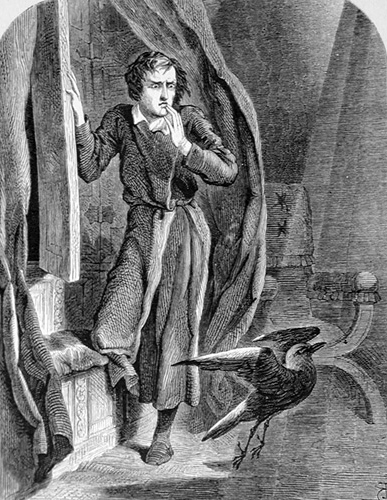
I have been a long fan of poetry, several years, I love to rhyme and plan out how each poem could connect rhythm-wise.  With that as well I have a long love for horror with such mixture I've come to the conclusion of loving Edgar Allan Poe's work. One of my most favourite as done by him is "The Raven", signifying memories. On how the raven repeated and repeated reminiscence of a never-ending remembrance of the perfect maiden Lenore. How his lonesomeness and solitude proceeds him to talk to the raven. How seemingly the raven responds, with such the conversation deepens. Playing upon our memories of our past in which we cannot choose but to remember. I admire how the poem was written and its symbolism for remembrance and unmotivation. How nothing can burn his fire once more. 

Why is the text written in the way it is?
The text is written in a way that suggests its repetitive nature. The way in which feels a long for someone; with such on how none can spark a light within us. As such we are then to feel the emotions of Poe whilst writing this poem. Inspired by horror as well a dwindling feeling of melancholy can be felt.


Edgar Allan Poe published “The Raven” 170 years ago today | KCRWThe Raven - Wikipedia

Tuesday, March 23, 2021

Perspective: The Beatles

With great influence comes many impacts as well. Impacts that affect the world views, how perspective is a difference within not only different cultures, ages but as well as individual values as well. Through the decades of the 1960s, there were many outcries of negativity through the fame of The Beatles. Continuing on with the 'Fab Tour', 1964, rejection from the older generation were a given. Many have thought of their music and influence as leading the newer generation-then- into ruins and sins. Shaped by the Great Depression as well as the war, this has caused many of those from such generation to describe such as one from an 'old tom-tom cult'. With some even thinking of the new music as anti-religious which it wasn't.

However, there are also many positive changes in which came from The Beatles. Optimistic perspectives, how they have revolutionized the modern music that we have today. It has paved the way for the newer generation to express their values. Being the first international renowned band, as they then were in the time where television gain popularity also. They have not only set trends in music but also in fashion. They revolutionized the industry in being unique from the then quite formal attire and music that people listened to. 

The Beatles 1964 "Fab Tour": Map

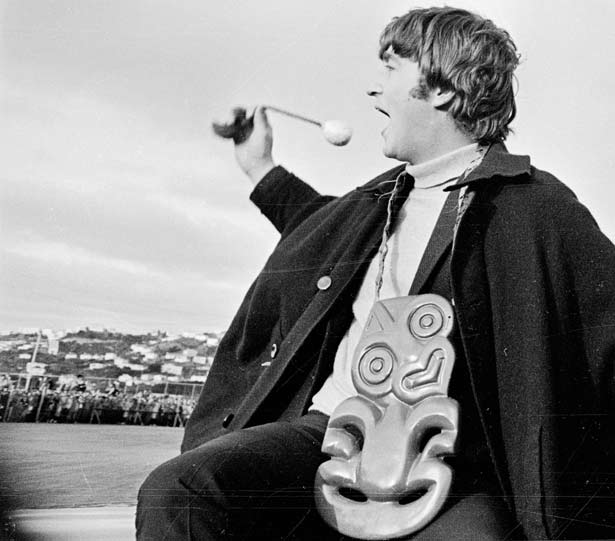
The Beatles arrive in Wellington, 1964Musical Muses: Fashion Inspired by The Beatles - College Fashion